Thứ Hai, 30 tháng 3, 2015

Veteran still searching for his comrades


Final farewell: Veteran Nguyen Van Minh (left), with an officer and soldiers from the Binh Thuan provincial military headquarters, works to exhume martyrs’ remains and rebury them in their final resting places. — VNS Photo

The war is long over, but Nguyen Van Minh cannot forget the heartbreak and haunting worry about his comrades who died in battle, their bodies still somewhere out there.


That is the reason why veteran Minh, who lives in the central province of Binh Thuan, has spent a lot of time and effort to go to several former battlefields to find the remains of his comrades.


Thanks to the support and assistance of several local people and governments, he has found more than 50 sets of remains of soldiers who died during the anti-American war.


Born in 1946, Minh served in the army as a commando from 1968. During the war, he participated in several combats in the central region, especially in Binh Thuan.


“The memory of the cruel war still haunts me,” he said. “I buried several comrades with my hands.


“My commando unit’s fights against the enemy were very fierce. The line between life and death was very thin. A soldier, who buried his comrade yesterday, could fall to the storm of lethal weapons.


When the country was liberated in 1975, Sergeant Minh returned home and became a farmer in a war-torn village that faced so many obstacles.


Although he has spent all his time rebuilding his life and earning a living, he always thinks about the fallen soldiers.


Minh remembers exactly the first time he went to find his comrades’ remains.


The battle at the enemy’s entrenched fortification, at Ham Thuan Nam District in Binh Thuan in November 1971, is engraved in his mind. His battalion defeated the enemy and occupied the fortification, but two soldiers were killed. They were Truong Quang Luc from the central province of Nghe An and Le Huy Hoang from the northern province of Ha Tay (now on the outskirts of Ha Noi).


When gunfire paused in mid-battle, Minh carried Hoang’s body away from the fight. But, with the enemy bombarding violently, Minh was forced to bury his comrade near the commander’s bunker and leave the site.


Minh didn’t forget his comrade. He spent several nights reminiscing the battle and how he had buried Hoang. He shared with his wife the idea of returning to the site and looking for Hoang’s grave. He wanted to exhume and take Hoang’s remains to his homeland to help him stay close to his family.


Minh’s wife enthusiastically supported his wish and encouraged him to start out.


That was the first time Minh went to find the martyrs’ graves.


He left on an old bicycle, carrying a bottle of water and a rice ball his wife had prepared, at 5am on March 23, 2006, for Ham Cuong Commune in Ham Thuan Nam District.


On reaching there, he was flabbergasted to see that the former battlefield had completely changed in 35 years. The forest of the old days, which had bunkers, shelters, blockhouses and trenches, had been replaced by new houses standing close together, with green gardens of dragon fruits spreading to the horizon. Despite several days of diligent search, he could not find any trace of Hoang’s burial site. The weak, old man felt tired and sometimes hopeless.


“But when I thought of the comrade, I did not allow myself to be discouraged,” he said.


Minh meticulously searched for the grave among trees, gardens and grass plots. He compared the current layout of the site with the details he remembered.


He kept searching and calling out to his comrade in tears, “Hoang, I’m looking for you. I want to bring you back home. Where are you? Come in a dream and show me the way.”


The martyr seemed to hear Minh’s call. After three months of search, soaked by the sun and rain, Minh found the exact location of the burial site. Hoang’s grave was in a dragon fruit garden. Finally Hoang’s remains were brought back to the martyr cemetery in his hometown.


The success encouraged Minh to continue his endeavour. He decided to spend his time and efforts to visit former battlefields in remote, mountainous areas.


On March 20, 2010, he once again packed his clothes to go to Da Huoai District, in the Central Highlands Province of Lam Dong, to find the graves of comrades who died during the attack on Da Huoai on October 11, 1971.


Minh’s unit had won a major victory, but the battalion lost five soldiers. Among them, the bodies of two soldiers could not be found. The other three were Tuan who was the second-in-command, Noi from the northern province of Bac Giang and Ha from the northern province of Ha Nam. After the battle, their comrades buried the dead soldiers close to Road 20, about 19km from the battlefield.


Depending on his memory, Minh finally found the burial place of the three soldiers in eight days. The remains of the three martyrs were then reburied at the martyrs’ cemetery in Bao Loc District, Lam Dong Province.


Minh recalled the most difficult, but also the most successful, of his search was the journey to Ham Liem Commune, Ham Thuan Bac District, in Binh Thuan.


On January 12, 1969, Battalion 200C co-ordinated with Battalion 840 and guerrillas to attack the enemy’s military post of Tan Nong, in Ham Liem Commune.


While Minh’s groups secretly approached the post’s first fence, the enemy patrol detected the other groups who were in charge of encircling the site. The ambush tactics failed. Several soldiers were killed and wounded. Battalion 200C and Battalion 840 lost 17 and 10 soldiers, respectively.


Due to the fierce battle with the enemy’s firepower, the team had to leave all the bodies on the battlefield.


“I’m sure that the battle haunted not just me, but all survivors,” Minh said. “I could never have a clear conscience while my comrades were still out there.”


Early in January 2012, he started the search with little hope because he hadn’t buried the martyrs, and was not sure that their bodies would still be there or had been taken to another place by the enemy.


The search lasted six months. Many a time, he thought of giving up.


“It seemed impossible to find them,” he said.


“The hard work and poor living conditions made me sick, but I tried self-medication to continue the search.”


Determined to find his teammates, he asked Binh Thuan Province’s military headquarters for help.


His proposal was quickly approved. The provincial military headquarters sent several soldiers to help him.


Minh spent several sleepless nights plotting out the former battle site, and discussed the possible position of the graves with other veterans. Finally, he and his helpers identified… the burial place of the 27 martyrs in the catacombs of the former military post. The burial place, about 300sq.m in area, now was part of a rice field of Nguyen Ngoc Thong, a resident of Ham Liem Commune. The remains of the 27 martyrs were exhumed and buried again in the Binh Thuan provincial martyrs cemetery.


Besides quietly looking for martyrs’ remains, Minh also provided valuable information to help appropriate authorities in Binh Thuan search for and retrieve the remains of othersoldiers.


Recently, thanks to the information and maps he sketched from memory, the Binh Thuan provincial military headquarters found the remains of nine soldiers from Battalion 186, who died during a 1969 attack on Ba Hoe military post.


In May last year, the remains of the nine soldiers were found and re-buried at the provincial martyrs’ cemetery.


People may know Minh as a veteran who is enthusiastic about finding martyrs’ remains, but they don’t know that he spent money from his own savings to fund his search over several years.


We visited Minh when the Lunar New Year of the Goat was approaching. He was excavating in a forest in Ham Thanh Commune, Ham Thuan Nam District, with soldiers from the provincial military headquarters.


They were looking for the remains of soldiers who were killed while defending an infirmary in February 1968.


“I can never forget the comrades who faced dangers and shared both joy and sorrow with me in the war,” he said.


“We used to tell each other that no one knew who would be alive or dead the next day. We promised each other that those who survived would live for the dead.


“People praise me and the families of the martyrs express their gratitude to me for finding the remains. But what I did cannot be compared with the martyrs’ sacrifice.” — VNS


Veteran still searching for his comrades

www.24htour.com
www.facebook.com/24htour
www.twitter.com/24htour
www.pinterest.com/vn24htour
#24htour #‎vietnamtravelnews‬ ‪#‎vntravelnews‬ ‪#‎vietnamnews‬ ‪#‎traveltovietnam‬ ‪#‎vietnamtravel‬ ‪#‎vietnamtour‬‬‬‬‬‬‬‬‬‬‬‬‬‬‬‬‬‬‬‬‬‬‬‬‬‬

Is Ha Noi barking uspan the wrong tree?


Fringe benefits: A view of the Thu Le Lake in dowtown Ha Noi. The tree coverage in the city is at around 2sq.m per person. The city plans to increase this slowly, by planting 1,500-2,000 trees every year. — VNS Photos Truong Vi

A tree-felling project runs foul of public opinion, highlighting Hanoians’ deep, spiritual ties with the city’s trees. Luong Thu Huong and Le Huong talk to a few experts about the re-greening challenges that lie ahead.


He could not quite put his finger on the overwhelming sadness that he felt.


“The street that has been so familiar to me suddenly became completely strange,” said Nguyen Tuan Anh.


The student of the Ha Noi University on Nguyen Trai Street, was referring to the felling of a row of xa cu (African mahogany) trees and their replacement with a species he did not recognise.


The street was at the heart of the controversy last week as the chopping of 500 streettrees provoked widespread protests by Hanoians.


The protests and subsequent suspension of the project trained an intense spotlight on the capital city’s trees and residents’ relationship with them. Many expressed the realisation of how integral old trees are to their memories and experience of Ha Noi.


“I was born and raised in Ha Noi. The rows of ancient trees planted along the streets have become an integral part of my life and my memory of the city whenever I travel elsewhere,” said Hanoian Lai Quoc Khanh.


“Whoever takes a leisurely walk or rides under shady trees in Ha Noi during all the four seasons will share the same affection for them.”


Given the controversy, we felt a closer look at the trees and their history was in order.


The Ha Noi Green Trees-Park Company estimates that there are about 50,000 trees of more than 100 kinds planted along the city’ streets.


In fact, one differentiating aspect of the city, is that every old street is connected with one tree variety. For example, Ly Thuong Kiet Street is renowned for its rows of com nguoi (hackberry), Hoang Dieu deeply impresses with its African mahogany trees and Dien Bien Phu casts a mystical aura with hundred-year-old bang (terminalia catappa) trees.


Resting in the shade of trees is one way many Hanoians take a break from their busy lives, and it is not surprising that there are some that have become landmarks and a source of pride.


Shady spaces: The Thong Nhat Park in Ha Noi. The capital city, once famous for its sylvan surroundings, has lost much of its greenery to rapid urbanisation.

The old banyan tree on Hang Trong Street, said to be the biggest in Southeast Asia, or the sacred bo de (Bodhi) tree next to One-Pillar Pagoda that is an offspring of the one planted where Gautama Budha attained enlightenment in India, are prominent among these.


Most of the other old trees in Ha Noi have their roots in the Botanical Garden, considered the city’s green lung.


Nguyen Thi Thach, who manages the garden today, said that the first director of the garden, Le Marie, is credited with bringing many kinds of precious trees to plant in the garden.


Amidst all the changes that the capital has undergone, the Botanical Garden remains the oldest with the largest number of trees. Though it does not have the function of providing trees for the city anymore, it also remains a popular destination for residents and tourists.


Tree re-planning


Now, officials are claiming that with the development of the city over the years, many kinds of trees, especially in the old streets, have gradually shown their unsuitability to be planted on the streets.


African mahogany, which accounts for 28 per cent of the trees in the city, is the first that needs to be replaced, it has been suggested.


Nguyen Lan Hung, general secretary of the Union of Biology Associations, all African mahoganies should be moved out of inner Ha Noi for the residents’ safety, because their fasciculate roots make them prone to fall down during the storm season.


“Other kinds of trees, like the banyan trees that shed leaves in the winter, are also unsuitable, in my opinion. Keo (acacia) trees planted along Nguyen Chi Thanh Street are very brittle. They are short-term trees planted for wood, not meant for urban areas,” he said.


Officials have also said that during the period that the country was mired in economic difficulties, many unsuitable trees were planted without careful planning.


Walking haven: Phan Dinh Phung Street has become a popular photo-shoot site. — VNSPhoto Doan Tung

Presently, the tree coverage in the city is at around 2sq.m per person. The city plans to increase this slowly, by planting 1,500-2,000 trees every year.


The municipal administration has approved a long-term plan (until 2030, with vision until 2050) for the city’s street trees, parks, gardens and lake with the aim of “improving the urban architecture and environment as well as traffic safety.”


Accordingly, the capital will be built into a green and clean city by 2030. Pollution problems in the former inner Ha Noi will be basically solved while the living environment of the citizens will be improved. The current system of trees will be maintained and developed by exploiting the available advantages and potentials.


The project aims to reach the target of establishing 70 per cent for green space and 30 per cent for buildings.


Over 44,000 trees within the city have been coded to build a software programme of urban tree management, in addition to protecting and caring for the existing trees.


The Ha Noi People’s Committee also gave the green light to a Construction Department plan to chop down 6,700 old trees in 10 districts and replace them with new ones. It is this plan that has outraged the public.


“The replacement of unsuitable and dangerous trees is necessary to ensure the urban structure and traffic safety, especially trees on the urban railway line like Nguyen Trai or Kim Ma street”, Do Ngoc Hoang, general director of Ha Noi Green Trees-Park Company told the Nhan Dan newspaper.


“The average height of trees on these roads is 14-20m and the distance from the railway to the trees is 14m. Those trees will become very dangerous during heavy rains with strong winds. If a tree accidentally falls on the railway line, there can be unpredictable consequences,” he added.


Digging in: Hoa sua (Blackboard) trees are planted in a garden of the Ha Noi Green Trees-Park Company on the outskirts of the capital city. These trees are to be re-planted in downtown areas. — VNA/VNS Photo Anh Tuan

After many old African mahoganies on Nguyen Trai Street were chopped down early this year, hundreds of trees on other main streets in Ha Noi like Nguyen Chi Thanh, Kim Ma have been cut down and replaced with new ones.


However, Hanoians are upset that many healthy old trees have been chopped down, not just rotten ones.


Do Khanh Duyen, a resident of Nguyen Chi Thanh Street, said: “It was recognised as the most beautiful street in the capital city with two rows of shady trees. It is terrible that many of these trees have been chopped down. It is a crowded street, normally, so the loss of trees will seriously affect the environment.”


Spiritual roots


For long, trees have been treated as a special living entity by the Vietnamese, with feelings and spiritual lives, just like human beings.


Trees are believed to produce energy that interacts with that of the humans, which is why they are used in feng shui (geomancy) along with stone, water, mountains and direction.


In folk culture, trees are believed to host souls of gods and demons.


“In the past, people in villages planted trees not only for shade,” said To Ngoc Thanh, chairman of Viet Nam Folk Arts and Literature Association.


“They planted trees to wish for immortality.”


Da (banian), gao (bombax ceiba) and de (bodhi) are among the most popular trees in rural areas, Thanh said, adding that these can grow easily and live for a long time.


Even if a branch of gao falls on the ground, it will develop into a new tree, and the same thing happens to the root of banyan trees, he said.


Thanh also pointed to several sayings that denote the spiritual connotations that trees have in Viet Nam.


“Than cay da, ma cay gao, cao cay de”, roughly means, genies reside in banyan trees, ghosts in bombax ceiba and foxes in bodhi.


O cho phai phai phan phan/ Cay da cay than, than cay cay da, (Banyan trees live on its genies and genies live on banyan trees, signifying the interdependence of life).


He further said that worshipping trees is a tradition in many countries, not just in Viet Nam.


Researcher Dinh Thi Trang with the Da Nang Folk Arts and Literature Association, pointed out in one of her recent studies that several ethnic groups in Viet Nam worship different trees. For example, Muong group considers si (Chinese banyan, Malayan banyan, Indian laurel or curtain fig) as the root of their group while the Dao worship banyan and sau (Dracontomelon duperreanum) trees.


The Viet majority group worships Mau Thuong Ngan (Mother of Mountain), banyan and bombax ceiba trees. Banyan and bombax ceiba trees are planted in every village, temple and pagoda.


Trang said that the tree is a symbol of continuous evolution. In growing towards the sky, it reflects all vertical meanings and also symbolises the cycle of death and rebirth.


A tree changes its leaves every year, so it recalls circulation. Thus, a tree is something that surpasses itself, and deserves to be an object of worship.


Dang Ha Phuong, who lives on the same street, agreed with Duyen.


“There used to be a 20-year-old keo (acacia) providing shade every summer afternoon in front of my house. It has already been cut down and replaced by another small tree. I wonder when the new tree will be able to provide a cool shade like the previous one.”


According to the project implemented by Ha Noi Construction Department, the old trees on 190 streets will be replaced mainly with long nao (camphor), giang huong (Burma Padauk), sao den (Takhia) and vang tam (Manolia) trees.


However, this selection, especially Manglietia fordiana, has also been criticised as unsuitable.


Le Huy Cuong, member of executive board of Viet Nam Association for Conservation of Nature and Environment, said this tree variety should be planted on high hills as they prefer acid soils and cool, damp conditions, so it is not certain that it will grow well on Ha Noi’s pavements that often get submerged during heavy rains.


“Each kind of tree for replacement should be carefully studied to examine whether they can actually adapt to the city’s conditions. The seeds should be checked as well to avoid planting wrong kind of trees,” Cuong said.


Luong Anh Quan, a resident of Hoan Kiem District, was willing to give benefit of doubt to the city authorities.


“I think that it is necessary to improve the tree system in the city, but it should be done properly.


“I want to be positive and think that recent efforts to regreen the city are based on the love for Ha Noi to some extent. So let that love be harmonious with that of many Hanoians who have raised their voice in recent days to protect rows of old trees.” VNS


Is Ha Noi barking uspan the wrong tree?

www.24htour.com
www.facebook.com/24htour
www.twitter.com/24htour
www.pinterest.com/vn24htour
#24htour #‎vietnamtravelnews‬ ‪#‎vntravelnews‬ ‪#‎vietnamnews‬ ‪#‎traveltovietnam‬ ‪#‎vietnamtravel‬ ‪#‎vietnamtour‬‬‬‬‬‬‬‬‬‬‬‬‬‬‬‬‬‬‬‬‬‬‬‬‬‬

Mothers going crazy over food selfies crazy


Over the last two days, my cousin Nguyen Phuong Ly, 22, has been complaining about her mother Nguyen Ngoc Diep, a restaurant owner, for spending a lot of her cooking time posting pictures of fully-done food on various social network sites.


“In normal course, we have dinner at 7pm after mom finishes her work and comes to the kitchen. She usually makes quick and simple but nutritious dishes that take half an hour or even less. But of late, the process has begun taking more than an hour. As we wait, starving, she is busy decorating and taking photos of the food (the dishes) with so much of joy and patience,” says Ly about her mom’s hobby.


Lately, alongside fads storming Facebook, such as posting selfies, showing off nice bodies, private properties and kids, a section of young mothers have found a new interest: uploading high quality photos of home-cooked food. No wonder, the number of food groups is rocketing day by day, with up to thousand members in every group.


“Since my mom become a member of the social group ‘Moms Who Love To Cook’, she devotes more of her time, mind and energy to making a perfect dinner, then spends more time garnishing and setting up the table. Sadly, she makes those dishes for people in the virtual world for others to contemplate and comment, not for us.


“By the time she finishes, the food has already gone cold. Still, we are not allowed to eat before she arranges and photographs her finished product. What she is making these days is no longer that simple; instead, it requires more steps to have those sparkling artistic pictures,” adds Ly.


But Diep thinks differently. As a mother of three, she found taking pictures of food a new inspiration for her tedious way of life.


“It has become a part of my daily life. If I do not do it, I cannot help but feel my day will not be complete or fulfilling. Sometimes, I feel very exhausted to cook so much, but when I read all the comments of other members, I feel so proud that I forget all the tiredness,” Diep says.


Like any other trend, taking photos of food and drink and posting them on visual world is receiving more and more attention from young women. Alongside, participating in a cooking group is also an ideal way to help young wives and single women to become more skilful and active in preparing a delicious meal for their husbands and boyfriends. As a member, each person can learn to share cooking experiences, unique and fresh recipes, as well as ways to make a dish more pleasing to the eyes.


In contrast, this trend is followed by some dark aspects. Many impolite and disrespectful comments find a way to jump in and such people make these groups a mess.


On “Khoi Vat Oc” (No Need To Brainstorm) group, one of the most favoured forums for people who love to cook in Viet Nam and which has more than 11,000 “Likes”, bad conversations and mean words are proliferate.


Trinh Phuong Trinh, a long time member who has uploaded pictures of many nice looking dishes with fully detailed ingredients and recipes, says most of her posts on this group are reused by some members without asking for permission.


“I have put in all my heart and mind into this work. Cooking is an art which requires a lot of patience and passion, and sharing it on Facebook is an art, too. But not everyone can have a nice photo for their dishes, while everyone wants to be praised in good words, and to receive as many ‘likes’ as possible. That is why some other members unintentionally took mine and made them into their illustration image without mentioning the source. That led to a tiff between me and some others. Of course, I try to use polite words as much as I can, but some people cannot stand any copyright infringement and insult those who borrow their photos without asking first.”


Trinh also says these fights have reduced the culture of politeness and finesse that is necessary in any cooking group, and people who do that have no sense of responsibility to show respect to those who have made these dishes.


Tran Thanh Hai, admin of the “People Who Love To Cook And Enjoy Good Food” group, featuring over 33,000 members, shows her concern over these uncultured actions.


“Whenever a member posts something, hundreds of other members just jump in and upload photos with the same content. There are people who even ask for recipes in a very rude way. In my opinion, young mothers and wives should now spend more time with their men and kids, than indulge too much in beautifying their posts and having disagreements with other members. With time, those comments will be gone, but their loved ones who truly care for them are still here. They must find a better way to balance their real life and the visual world. If they do so, there will not be rude comments on social groups,” Hai says.


As for me, I feel secure that my mom is a great cook and a poor netizen, as she only cooks for my family, silently and wholeheartedly. There is no need to show off before the public what she has done, and even when she did so, she never got involved in a cyber fight and has remained always at ease. — VNS


Mothers going crazy over food selfies crazy

www.24htour.com
www.facebook.com/24htour
www.twitter.com/24htour
www.pinterest.com/vn24htour
#24htour #‎vietnamtravelnews‬ ‪#‎vntravelnews‬ ‪#‎vietnamnews‬ ‪#‎traveltovietnam‬ ‪#‎vietnamtravel‬ ‪#‎vietnamtour‬‬‬‬‬‬‬‬‬‬‬‬‬‬‬‬‬‬‬‬‬‬‬‬‬‬

Hanoi City Full Day Group Tour


Destinations : Hanoi – Ho Chi Minh Complex – One Pillar Pagoda – Tran Quoc Pagoda – Temple of Literature – Museum of Ethnology – Hanoi Old quarter


Experience the essential things to do in Hanoi, Vietnam. Let’s take part in Tour to see all the historical and momument sights of the city with full commentary provided. We will have oportunity to visit most of major attractions including Tran Quoc Pagoda, Ho Chi Minh Complex, Temple of Literature


  • Full Day FULL DAY HANOI CLASSIC TOUR


    8.00: We pick you up from your hotel and take you to visit the Ho Chi Minh Complex which includes Ho Chi Minh Mausoleum – the final resting place of the beloved national hero, Uncle Ho. Then we visit the President Ho Chi Minh’s stilt house where he lived off and on from 1958 to 1969. You’ll also go to the Ho Chi Minh Museum where you can learn about this remarkable man and what he did for Vietnam and the region.

    Next, you’ll visit the One Pillar Pagoda which is actually a group of structures that collectively make up a pagoda built over the water in the middle of a square lake


    After that you’ll have a chance to explore the Tran Quoc Pagoda on the Shore of West Lake. From there you’ll go to the Temple of Literature which was Vietnam’s first university and is dedicated to Confucius.


    Alternatively you can choose to have lunch at a restaurant in Hanoi Old quarter. Afterwards you’ll walk through the Old Quarter where you’ll get a sense of the daily life of this busy city on your way to Hoan Kiem Lake – the heart and soul of Hanoi. This is the part of town where the commercial streets of modern Hanoi meet the ancient 36 streets and numerous alleys amongst temples, pagodas and lakes.


    Finally you’ll stop at Ethnology museum. This superb museum showcases the depth of Vietnamese cultural diversity with an astounding collection of 15,000 artifacts gathered from throughout Vietnam. Maps, displays and dioramas are labeled in Vietnamese, French and English. Displays portray a typical village market, the making of comical hats and a Tay shamanic ceremony, videos show the real thing. You can also check out a traditional Black Thai house reconstructed in the museum. There’s also a centre for research and conservation where scientists from all over the world study traditional Vietnamese cultures.


    In the evening, you will enjoy a traditional Vietnamese water puppet show. (Deluxe Tour)


    Meals: Lunch

    Accommodation: NA

    NOTE: Ho Chi Minh Mausoleum and Museums is closed on Monday and Friday so there will be other alternative options if you depart on Monday and Friday.

    Important Notes:

    PROGRAMS & SCHEDULES SUBJECT TO CHANGE WITHOUT PRIOR NOTICE

    The mausoleum (where the body is kept) is closed on Monday and Friday, in September and October for preservation.

    Rules regarding dress and behavior are strictly enforced by guards, legs must be covered (no shorts or miniskirts), long shirt/blouse (cover shoulders). Visitors must be silent, and walk in two lines. Hands must not be in pockets, nor arms crossed. Smoking, photography, and videotaping are also not permitted anywhere inside the mausoleum.


  • Accommodation1 AdultTotal
    Superior
    Included: 5% Service charge, 10% VAT
    $42$42

    Price Includes

    Transfer from/back to your Hotel

    Vietnamese Water puppet show.

    All entrance fees

    English speaking guide

    Lunch at well know local restaurant.


    Price Excludes

    Accommodation, Visa arrangement

    Drinks

    Personal expenses

    Other things not clearly mentioned in the included list.


    Booking Policy

    Cancellation by Customer:

    More than 7 days prior: 10% of total rates.

    From 4 to 7 days prior: 50% of total rates.

    Less than 3 days prior: 100% of total rates.

    No-Show: 100% of total rates.

    Children Price & Extra Bed:

    Child under 3 years old: F.O.C (limiting to one child per booking only).

    Child 3 – 10 years old: 75% adult price.


Hanoi City Full Day Group Tour

www.24htour.com
www.facebook.com/24htour
www.twitter.com/24htour
www.pinterest.com/vn24htour
#24htour #‎vietnamtravelnews‬ ‪#‎vntravelnews‬ ‪#‎vietnamnews‬ ‪#‎traveltovietnam‬ ‪#‎vietnamtravel‬ ‪#‎vietnamtour‬‬‬‬‬‬‬‬‬‬‬‬‬‬‬‬‬‬‬‬‬‬‬‬‬‬

Travel company builds Red River tourism as special treat for tourists


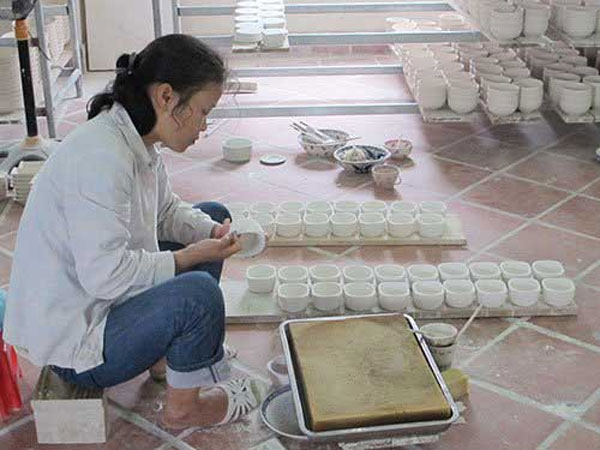
Red River tourism, traditional festivals, ancient villages, Bat Trang ceramic village


He added his company has carried tourists to historical and cultural relic sites along the banks of the Hong and Duong rivers in Hanoi, northern Bac Ninh and Hung Yen provinces since 1996.


The company has opened a number of programmes, including a one-day trip along the Red River to visit the Dam and Dai Lo temples in Hanoi’s Thuong Tin district, the Chu Dong Tu temple in Hung Yen’s Khoai Chau district, the Bat Trang ceramic village in Hanoi’s Gia Lam district and But Thap pagoda and Dong Ho folk painting village in Bac Ninh province.


The company plans to develop the quality of its services, rebuild ships to international standards and improve crew qualifications to turn the Red River into be a striking destination in the capital.


The Red River is a major contributor to the Red River Delta which includes 11 provinces and centrally-run cities, namely Hanoi, Hai Phong, Hai Duong, Bac Ninh, Vinh Phuc, Hung Yen, Thai Binh, Nam Dinh, Ha Nam, Ninh Binh and Quang Ninh.


The delta is a cradle of the wet rice civilisation and endowed with special cultural and historical value. Numerous significant architectural relics, traditional festivals and ancient villages have cemented the region’s unique and rich culture.


This year, the region is expected to welcome 17-18 million domestic visitors and 3.2-3.5 million international tourists. The numbers are expected to hit 24-25 million and 4.5-5 million respectively by 2020.


Travel company builds Red River tourism as special treat for tourists

www.24htour.com
www.facebook.com/24htour
www.twitter.com/24htour
www.pinterest.com/vn24htour
#24htour #‎vietnamtravelnews‬ ‪#‎vntravelnews‬ ‪#‎vietnamnews‬ ‪#‎traveltovietnam‬ ‪#‎vietnamtravel‬ ‪#‎vietnamtour‬‬‬‬‬‬‬‬‬‬‬‬‬‬‬‬‬‬‬‬‬‬‬‬‬‬

Phu Quoc prison recognised as special national heritage site


The ceremony was attended by Deputy Prime Minister Vu Van Ninh, leaders of Mekong Delta cities and provinces, war veterans and nearly 600 former Phu Quoc prisoners.


The recognition for the prison, where Vietnamese communists were jailed during the war, reflects the Party and State’s deep gratitude to over 4,000 war martyrs who laid down their lives in the prison and tens of thousands of Vietnamese communists who joined the national struggle for national liberation, independence and freedom and for people’s happiness.


The acknowledgement also honours the huge value of the site in educating the country’s revolutionary tradition and raising national pride and responsibilities among younger generations.


The ceremony was followed by an arts programme entitled ‘Sentiments towards the country’s border, sea and islands regions’.


Addressing the event, Deputy PM Vu Van Ninh stressed that borders, seas and islands play a vital role in the country’s socio-economic development and maintenance of security and defence.


Safeguarding national sovereignty over the regions is protecting the sacred value of the country, and it is the responsibility of all ministries, sectors, localities and each Vietnamese citizen, he emphasised.


He called on the entire people and army to demonstrate their strong will and utmost determination to protect the national sovereignty, territory, sovereign rights, and jurisdiction over its border, sea and island regions while sharing difficulties with soldiers stationed there.


Phu Quoc prison recognised as special national heritage site

www.24htour.com
www.facebook.com/24htour
www.twitter.com/24htour
www.pinterest.com/vn24htour
#24htour #‎vietnamtravelnews‬ ‪#‎vntravelnews‬ ‪#‎vietnamnews‬ ‪#‎traveltovietnam‬ ‪#‎vietnamtravel‬ ‪#‎vietnamtour‬‬‬‬‬‬‬‬‬‬‬‬‬‬‬‬‬‬‬‬‬‬‬‬‬‬

Visiting mountain in coastal Vung Tau


Vung Tau, Tuong Ky Mountain, Ho May Park


With a height of around 250 meters above sea level, Lon Mountain stands close to the shore and has cool climate all year round. In rainy season, tourists can see clouds hanging around the mountain side early in the morning. In dry season, visitors will have a chance to witness the change of color in the forest when the fresh green of leaves is replaced by red and yellow, and if it is November, visitors will find themselves walking under the beautiful cherry blossom flowers in a comfortable atmosphere.


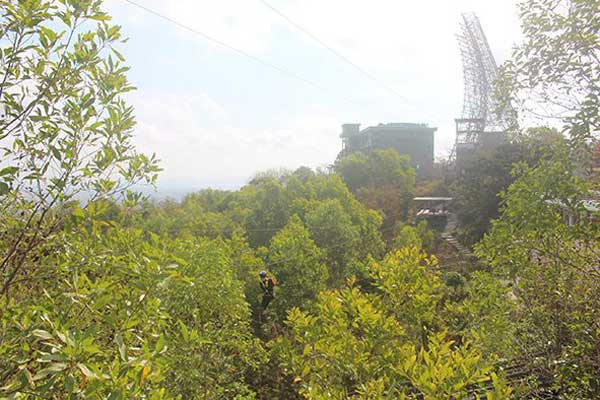
Around Big Mountain’s side is a small path covered with a mineral pitch. Tourists can travel by motorbike or car along this path to reach the top of the mountain and enjoy the view of the forest during the way up.


Vung Tau, Tuong Ky Mountain, Ho May Park


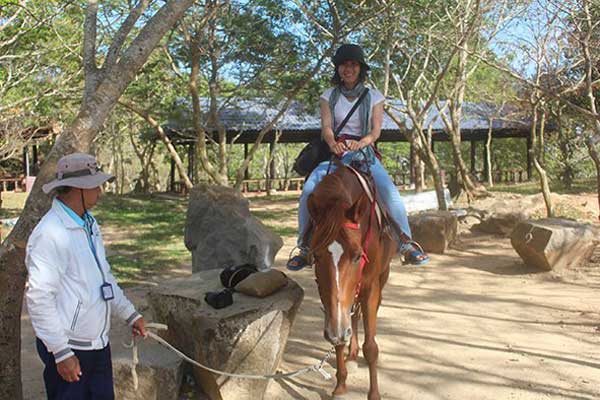
Midway to the mountain peak is Ho May (Cloud Lake) Cultural and Ecological Park, covering an area of 40 hectares. The park is a complex of hotel, resort, restaurant, pagoda, temple, and a number of entertainment activities including mountain climbing, swimming, swinging, horse riding, and cycling for a sightseeing tour from above.


The other way to get to Ho May is taking a cable car ride of Ho May Park at the mountain foot. The full package, including a return ticket for a cable car ride, an admission ticket to the park, and fees for entertainment activities costs VND300,000 (US$14) per adult and VND150,000 per child.


It costs those who do not use cable car service VND200,000 to enter Ho May Park and enjoy activities there.


Visiting mountain in coastal Vung Tau

www.24htour.com
www.facebook.com/24htour
www.twitter.com/24htour
www.pinterest.com/vn24htour
#24htour #‎vietnamtravelnews‬ ‪#‎vntravelnews‬ ‪#‎vietnamnews‬ ‪#‎traveltovietnam‬ ‪#‎vietnamtravel‬ ‪#‎vietnamtour‬‬‬‬‬‬‬‬‬‬‬‬‬‬‬‬‬‬‬‬‬‬‬‬‬‬